Why You Keep Making the Same Mistakes — And How Founders Break the Cycle
If you keep making the same mistakes despite knowing better, you're not broken, undisciplined, or uniquely flawed — you're running a predictable loop nearly every founder runs. You closed the same deal-killing meeting the same way you did six months ago. You hired the wrong VP of Sales — again — using the same gut feeling that failed you last time. You promised yourself you'd stop saying yes to every distraction, and then your calendar quietly filled with the exact commitments you swore off in January.
And it isn't only founders. The parent who keeps having the same fight, the writer who keeps missing the same deadline, the person who keeps dating the same wrong partner — they're all running versions of the identical machinery. That quiet, frustrated voice asking why do I keep making the same mistakes has an answer, and the pattern behind it has a name, a mechanism, and a way out.
This article maps the full anatomy of repeated mistakes: the psychology beneath them, the traps that amplify them for founders specifically, and the precise, evidence-based system for breaking the loop. By the end, you'll understand not just why the cycle repeats, but exactly how to interrupt it — permanently.
Why Do You Keep Repeating the Same Mistakes? The Short Answer
You keep making the same mistakes because your brain automates behavior to save energy. Most repeated errors are habit loops, emotional reactions, or unexamined beliefs running on autopilot — not failures of intelligence or willpower. Breaking the cycle means interrupting the loop at the level of awareness, environment, and identity, not by trying harder.
That's the snippet-ready truth. But the reason it feels impossible to stop is far more interesting — and far more fixable — than most people realize.
This is also the classic execution problem—here are 6 brain-based fixes for the knowing-doing gap in entrepreneurs.
What Happens in Your Brain When You Repeat Mistakes
Repeated mistakes aren't random. They're the visible output of three overlapping systems working exactly as designed. In more than a decade of advising early-stage founders, I've watched brilliant operators run the identical loop for years — and the breakthrough never came from intelligence. It came from seeing the machinery underneath.
1. The Habit Loop Is Energy Efficiency, Not Self-Sabotage
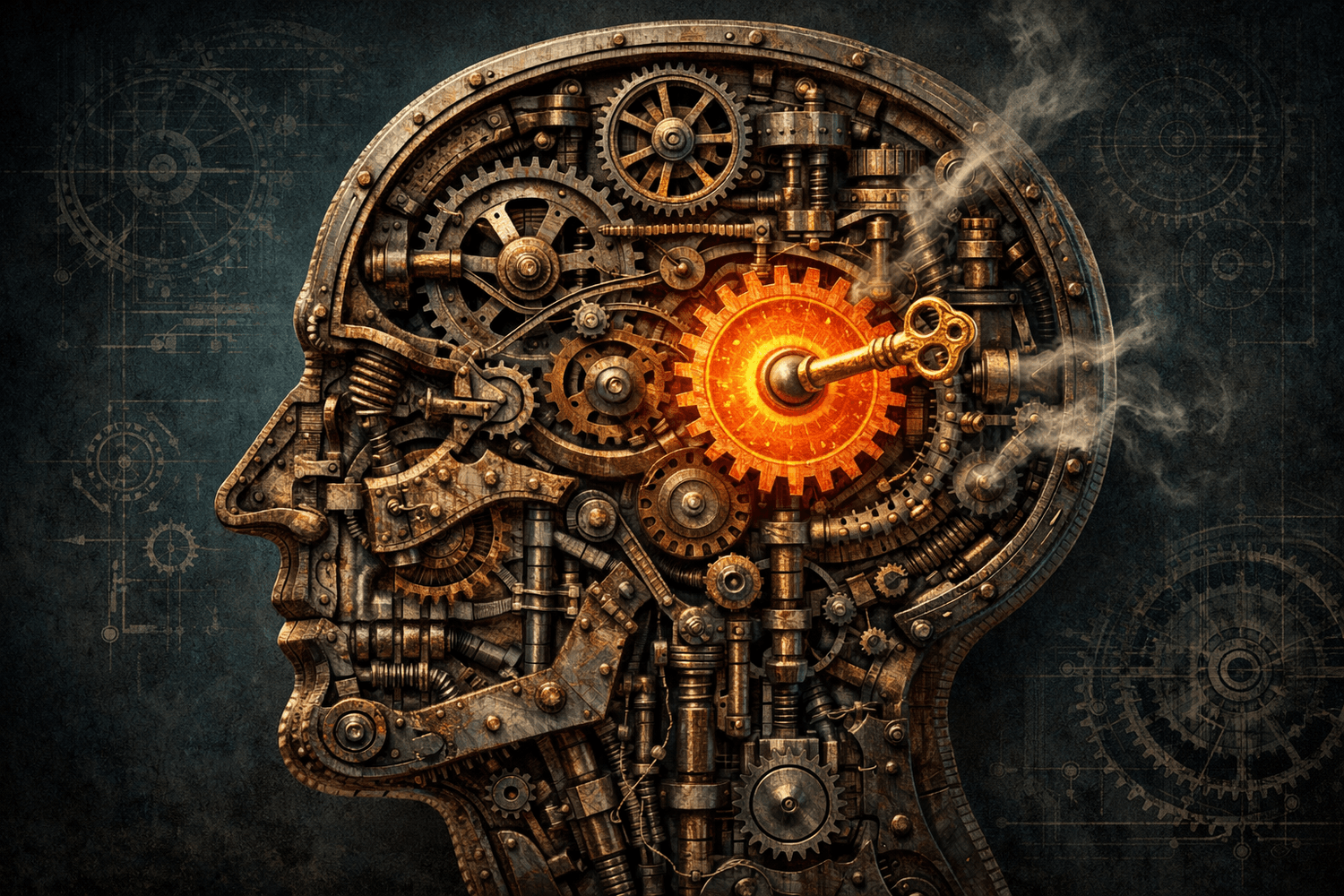
Your brain spends roughly 20% of your body's energy. To economize, it converts repeated decisions into automatic routines stored in the basal ganglia — the brain's autopilot center. This is the cue → routine → reward loop that journalist Charles Duhigg popularized in The Power of Habit, drawing on habit-formation research conducted at MIT.
Your brain doesn't know the difference between good automation and costly automation. Checking your phone when you're anxious. Micromanaging when you're scared. Avoiding hard talks when you're overwhelmed. These feel like choices. They're not. They're cached responses. You're not deciding — you're just hitting replay.
This is why "just stop doing it" almost never works. You can't out-willpower a system specifically built to bypass willpower.
2. How Emotional Triggers Drive Repeated Mistakes
Here's the part most productivity advice ignores. The mistakes you repeat are usually triggered by an emotional state, not a situation. The trigger isn't "a difficult employee" — it's the feeling of being challenged. The trigger isn't "a big decision" — it's the anxiety of irreversibility.
When you're stressed, scared, excited, or exhausted, your prefrontal cortex — the part of your brain that thinks things through — gets switched down. Psychologist Daniel Goleman called this amygdala hijack. In that state, you can't reach your best thinking. You reach your most practiced thinking. And your most practiced thinking is the exact behavior that caused the mistake last time.
So the loop tightens: stress triggers the old pattern, the old pattern creates a bad outcome, the bad outcome creates more stress.
3. How Limiting Beliefs Cause You to Repeat the Same Mistakes
Beneath habits and emotions sits the deepest layer: identity and belief. Cognitive scientists describe this through the lens of "self-schemas" — the internal models you hold about who you are and how the world works.
A founder who unconsciously believes "if I don't control everything, it falls apart" will repeatedly micromanage, no matter how many delegation books they read. A founder who believes "my worth equals my output" will repeatedly burn out, even after promising to rest. The behavior isn't the problem. The behavior is loyal to the belief.
This is the most important insight in this entire article: you don't repeat mistakes because you're failing to learn. You repeat them because the mistake is solving an invisible problem. Until you find what the mistake is protecting, you'll keep paying for it.

Why Founders Keep Making the Same Mistakes Most Often
If repeated mistakes are universal, why do they feel so brutal and so expensive for founders specifically? Because the founder context supercharges every layer of the loop.
Speed eliminates reflection. Founders make hundreds of micro-decisions daily under time pressure. Reflection — the only thing that converts experience into learning — gets crowded out. Without reflection, you accumulate experience without insight. You get older in the role without getting wiser in the pattern.
Success disguises the mistake. A founder can repeat a flawed hiring process, a flawed sales approach, or a flawed prioritization habit while the company still grows, because momentum masks the cost. The mistake doesn't kill you — it just quietly taxes you. This is the most dangerous form of repetition, because the feedback signal is muffled.
Isolation removes the mirror. Employees rarely tell founders the unflattering truth. Investors optimize for their returns, not your patterns. Without honest external reflection, you lose the outside view that would let you see the loop from above instead of living inside it. The stakes are real: Harvard Business School research by Shikhar Ghosh found that roughly 75% of venture-backed startups never return their investors' capital, and founder post-mortems consistently trace failure to repeated, self-inflicted decision patterns as much as to market conditions.
Identity fusion raises the stakes. When your company is your identity, admitting a repeated mistake feels like admitting a defect in yourself. So the ego quietly protects the pattern by reframing it: "It wasn't the same mistake — the circumstances were different." This rationalization is the single most reliable way to guarantee you'll do it a third time.
Notice the tension here: the very traits that make someone a successful founder — speed, confidence, identity-level commitment — are the same traits that lock the mistake cycle in place. The strength and the trap share an address.
If the loop feels like ‘I sabotage myself right before progress,’ this deep dive on the neuroscience of self-sabotage and subconscious mental blocks will help you spot the root faster.
How to Identify the Pattern Behind Your Repeated Mistakes
You cannot break a pattern you can't see clearly. Before any technique works, you need precise diagnosis. Here's the method I walk founders through in their first session — and I'll show you exactly how it played out with one of them.
A few years ago I worked with a SaaS founder — I'll call her Maya — who had hired and fired three "head of growth" candidates in eighteen months. She was convinced she had bad luck with people. We ran the audit below. The pattern wasn't bad luck. Every single hire happened within 72 hours of a board meeting where her growth numbers got questioned. She wasn't hiring for the role. She was hiring to make the anxiety of that meeting stop. Once she saw it, the loop broke in a single quarter.
Here are the four steps that got her there.

Step 1 — Name the Recurring Outcome, Not the Event
Don't write "I hired badly." Write "I keep hiring impressive talkers who can't execute." Specificity is everything. The pattern lives in the shape of the outcome.
Step 2 — Trace Backward to the Decision
Identify the exact moment you committed. For the hiring example: the moment in the interview you felt the warm "this is my person" feeling. That feeling is your cue.
Step 3 — Find the Emotional State at the Cue
What were you feeling right before the decision? Relief? Urgency? The desperate need to fill the role? Almost always, the bad decision was made to escape a feeling, not to pursue a good outcome.
Step 4 — Locate the Protected Belief
Ask: what would I have to feel or admit if I did this differently? If hiring slowly means sitting with the anxiety of an unfilled role, then the fast bad hire is purchasing relief from anxiety. That's the real transaction.
When you complete this audit honestly, something shifts. The mistake stops looking like stupidity and starts looking like strategy — a bad strategy solving a real emotional need. And strategies, unlike character flaws, can be replaced.
Want to pinpoint your exact pattern in under 3 minutes?
Most founders repeat mistakes that trace back to one of five Mental Imposter Types — and each type has a different trigger, a different blind spot, and a different escape route. Take the free Pattern Recognition Test to discover which type is running your loop, then get The Inner Critic Contract Audit Workbook delivered to your inbox so you can start rewiring the internal script that keeps the cycle alive.
How Founders Break the Cycle of Repeated Mistakes: The Full System
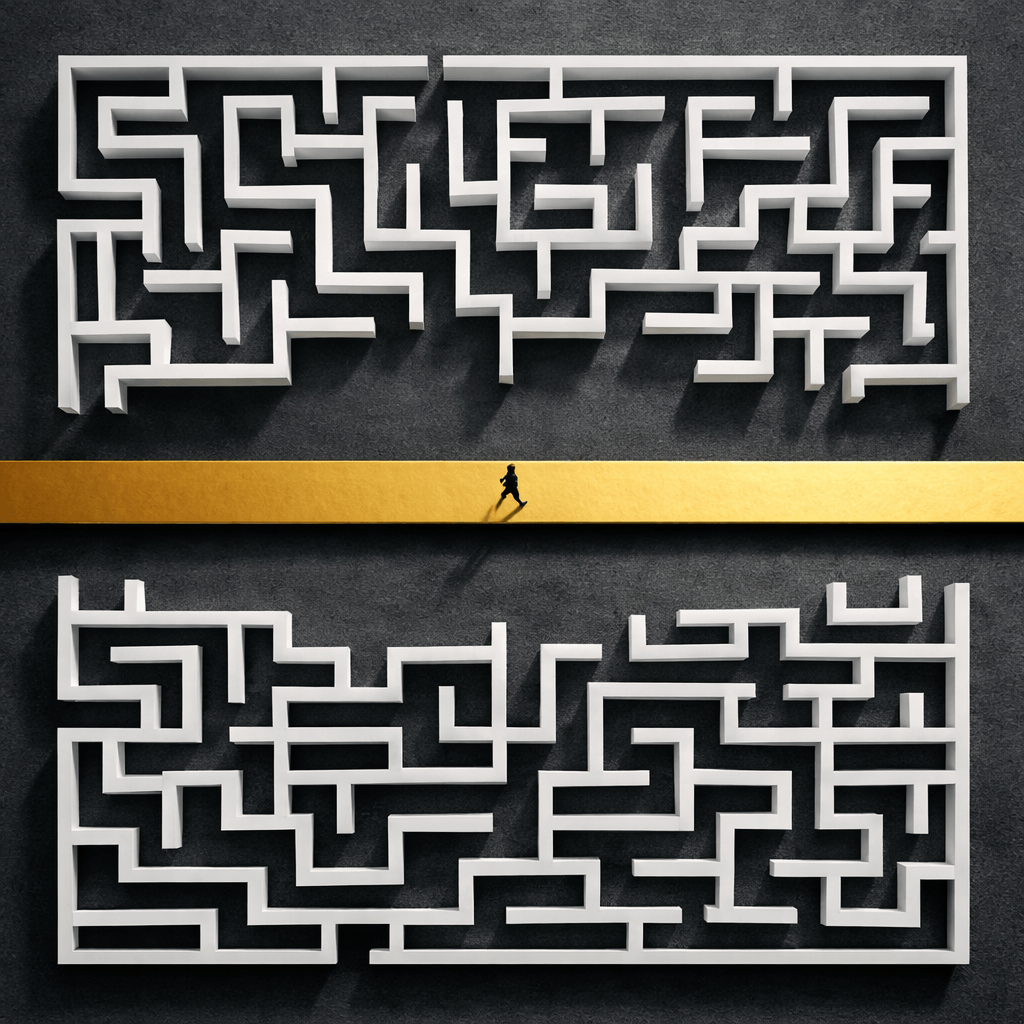
Breaking the loop requires intervention at all three layers — behavior, emotion, and belief. Here's the complete framework.
How to Stop Repeating Mistakes by Changing Your Environment
The fastest leverage isn't willpower — it's friction. Change the environment so the old routine becomes hard and the new one becomes easy.
If you impulsively reply to every Slack message and fragment your focus, you don't need more discipline — you need Slack closed during deep work blocks. If you make rushed hires, you build a structural gate: no offer extended within 48 hours of the final interview, no exceptions. The same logic works outside business: if you keep overspending, you delete the saved payment cards. You're not trusting your in-the-moment self. You're letting your calm, designing self constrain your reactive self.
The principle: make the right behavior the path of least resistance, and the wrong behavior require a deliberate override.
How to Stop Emotional Triggers from Repeating Mistakes
Since most repeated mistakes happen during amygdala hijack, you need a reliable way to restore prefrontal access before acting. This is the strategic pause.
Build a rule: any decision that pattern-matches my known loop gets a mandatory cooling window. During that window, you do one thing — name the emotion out loud or in writing. "I'm feeling the urgency to close this." Naming a feeling measurably reduces its grip. In a UCLA brain-imaging study, psychologist Matthew Lieberman found that putting feelings into words — "affect labeling" — lowers activity in the amygdala. The named feeling loses its automatic control over your hands.
A 30-minute walk, a night of sleep, or a single honest sentence to a trusted advisor can convert a repeated mistake into a one-time near-miss.
When you’re in amygdala hijack, the first move is regulation—use the 7-minute self-mastery routine for anxiety relief before you decide.
How to Change the Beliefs Behind Your Repeated Mistakes
This is the deepest and most durable fix. You replace the protected belief with a more accurate one.
The micromanaging founder shifts from "if I don't control it, it breaks" to "my job is to build people who don't need me in the room." The burnout founder shifts from "my worth is my output" to "a depleted founder makes expensive decisions." The new belief makes the old behavior feel wrong instead of safe — and that's when the change becomes self-sustaining rather than effortful.
Identity-level change is slow, but it's the only level where the pattern doesn't quietly return the moment you stop monitoring it.
If you're wondering what identity-level change actually looks like in practice — not theory, but the real shifts high-performing founders make when they finally stop running the same loop — I recorded a short training that walks through the five specific mindset shifts I've seen break the cycle fastest.
No fluff, no motivation speech. Just the internal pivots that make the old pattern feel impossible to return to.
→ [Watch the Free Training: 5 Mindset Shifts High Performers Use to Get Unstuck]
How Accountability Stops You from Repeating the Same Mistakes
Finally, install an outside view. A peer founder group, an executive coach, or a structured monthly retrospective creates the reflection that founder-speed normally destroys. The single most powerful question to ask a trusted observer: "What pattern do you see in me that I keep not seeing?"
The answer will sting. The sting is the sound of the loop being seen for the first time.
A 30-Day Plan to Stop Repeating the Same Mistakes
Theory dissolves without execution. Here's a concrete starting sequence:
Days 1–3: Run the pattern audit on your single most expensive recurring mistake.
Days 4–7: Design one piece of environmental friction that makes the old routine harder.
Days 8–14: Implement the strategic pause for that specific decision type.
Days 15–21: Write your old belief and its replacement; read the replacement daily.
Days 22–30: Recruit one external mirror and schedule a recurring monthly review.
You're not trying to fix everything. You're proving to yourself that one loop can be broken — because that proof rewrites the meta-belief that change is impossible for you.
Frequently Asked Questions About Repeating the Same Mistakes
Why do I keep making the same mistakes even when I know better?
Because knowing and doing run on different brain systems. Knowledge lives in the prefrontal cortex, but repeated behavior runs through automatic habit circuits and emotional triggers that bypass conscious knowledge entirely. Real change requires intervening at the level of environment, emotion, and belief — not just adding more information.
Is repeating mistakes a sign of low intelligence or lack of discipline?
No. Repeated mistakes are typically habit loops, emotional reactions, or protective beliefs operating automatically. They occur in highly intelligent, disciplined people precisely because the brain automates behavior to conserve energy. The repetition reflects an unexamined pattern, not a personal defect.
What's the fastest way to stop repeating a specific mistake?
Add friction to the environment so the mistaken behavior becomes difficult, and install a mandatory pause before any decision that matches your known pattern. Environmental design and the strategic pause produce faster results than willpower because they don't depend on you being calm and clear-headed in the moment.
Why do founders specifically struggle with repeated mistakes?
Founder life amplifies the cycle through constant time pressure (which kills reflection), success that masks the cost of errors, isolation that removes honest feedback, and identity fusion that makes admitting patterns feel threatening to self-worth.
How long does it take to break a repeated mistake pattern?
Behavioral interruptions can work within days, but durable change — especially at the belief level — typically takes 30 to 90 days of consistent practice with external accountability. The timeline depends on how deeply the behavior is tied to identity and emotional reward.
What if I break one loop but immediately start a different bad pattern?
This usually means the underlying emotional need or belief was never addressed — only the surface behavior changed. Return to the pattern audit and identify what the behavior was protecting. Patterns that replace each other share a common root belief.
The Real Reason You Keep Making the Same Mistakes
Here's what I've never seen fail. The founders who stop making the same mistakes don't get more disciplined — they get more honest. Honest about the feeling under the decision. Honest about the belief under the feeling. Honest about the price they've been quietly paying to dodge both. The mistake was never stupidity. It was loyalty to an old version of safety you've outgrown.
So pick one. The single most expensive loop you keep running. Open a blank doc right now and run the four-step pattern audit on it before you close this tab — because the moment you name the loop is the moment you finally get to choose your way out of it.
About the Author
By Milan | Founder of Milan'Z Coaching | NLP & Hypnotherapy Master Practitioner | Neural Reprogramming Coach | Creator of MSIP | Helping entrepreneurs and high-achieving professionals overcome imposter syndrome, self-doubt, and limiting beliefs since 2014. [About Milan]





UNLOCK FREE MINDSET TRAININGS & EXCLUSIVE DISCOUNTS YOU WON'T FIND ANYWHERE ELSE!
Subscribe to the newsletter and join driven entrepreneurs, solopreneurs, executives, business owners, and high-achieving professionals on a mission to become unstoppable forces for good.
GET MINDSET STRATEGIES DELIVERED TO YOUR INBOX
Unlock free mindset trainings, neural reprogramming techniques, and
exclusive discounts. Join entrepreneurs, executives, and high-achievers
breaking through their mental blocks.
CONNECT WITH MILAN
Got questions about Breakthrough Coaching or Neural Reprogramming?
Send me a message—I read every email.
FREE RESOURCES
© 2026 Milan'Z Coaching