Subconscious Reprogramming Explained: 17 Proofs You’re Not Broken
If you searched for subconscious reprogramming because you feel stuck in the same thoughts, habits, or emotional loops, the first thing to know is this: you are not broken. You are running patterns your brain learned to protect you. That distinction changes everything. What feels like damage is often conditioning. What feels permanent is often plastic. And what feels like proof that something is wrong with you is usually proof that your nervous system adapted to an earlier version of your life and never got updated.
Subconscious reprogramming is the process of identifying and changing the automatic beliefs, emotional reactions, and mental habits that operate below conscious awareness. It works by using neuroplasticity, repetition, emotional conditioning, and state-based learning to replace old patterns with new ones. It does not fix a broken mind. It updates a trained one.
Here is what most articles miss: your subconscious mind drives most of your behavior long before your conscious mind catches up. That means your reactions, your self-image, your stress responses, and even your sense of what is possible are often being directed by programming you did not choose.
The point is not that you are powerless. The point is that you are programmable. And once you understand that, the entire conversation changes.
If you’re thinking ‘this makes sense but I keep repeating the same mistake,’ start with how founders break the cycle of repeated mistakes.
Before you go further, test this in real time. If you have ever read an article like this and thought, “That sounds right, but I still don’t know what pattern is actually running me,” this is the fastest place to start. Take The Pattern Recognition Test to find your personal Mental Imposter Type, then get The Inner Critic Contract Audit Workbook so you know exactly how to interrupt the voice that keeps recycling the same ceiling.
Take The Pattern Recognition Test and get your result + the Inner Critic Contract Audit Workbook
What Is Subconscious Reprogramming? A Neuroscience-First Definition
Subconscious reprogramming is the deliberate process of identifying and reshaping the automatic thought patterns, emotional responses, and belief systems stored beneath conscious awareness. It is not magic. It is not empty positive thinking. It is the practical application of neuroplasticity, your brain’s proven ability to form new neural pathways and weaken old ones across the lifespan.
The brain is always learning, but it does not always learn what is true. It learns what is repeated, what is emotional, and what seems necessary for survival. That is why a belief like “I’m not enough” can feel natural even when it is false. It was reinforced, so it got wired in.
Subconscious reprogramming does not repair a defective person. It updates patterns that were learned under different conditions. Your brain built those patterns for a reason. That does not mean you have to keep living by them.
If you want the full ‘mechanics’ view of why your brain keeps replaying these loops, read why your brain works against you (the self-sabotage fix).
Why Do I Feel Broken? Why That Feeling Is Information, Not Identity
The feeling of being fundamentally broken is common, but it is not reliable evidence. It is often the emotional output of a nervous system shaped by stress, repetition, and old meaning patterns. Your brain is built to scan for threats first and accuracy second. That bias helped humans survive. It does not help much when the threat is an email, a memory, a breakup, or your own inner voice.
What Is the Real Reason You Feel Broken?
What feels like brokenness is usually an old survival pattern still running in the background. Your nervous system learned a response that once made sense, then kept repeating it long after the situation changed.
If you feel defective, ashamed, or emotionally stuck, that feeling may be data about your conditioning, not a verdict on your identity. That is why subconscious reprogramming matters. It helps you change the pattern instead of attacking yourself for having one.
This is where subconscious beliefs, nervous system regulation, and self-sabotage patterns all connect. You are not dealing with a moral failure. You are dealing with learned automation. Once you see that, you stop asking, “What is wrong with me?” and start asking, “What trained me to respond this way?”
If that question hit hard, don’t stay at the level of insight. Get specific. The Pattern Recognition Test shows you the exact mental pattern behind your stuck point, names your Mental Imposter Type, and gives you The Inner Critic Contract Audit Workbook to start changing it.
17 Proofs You’re Not Broken: The Science of Subconscious Reprogramming
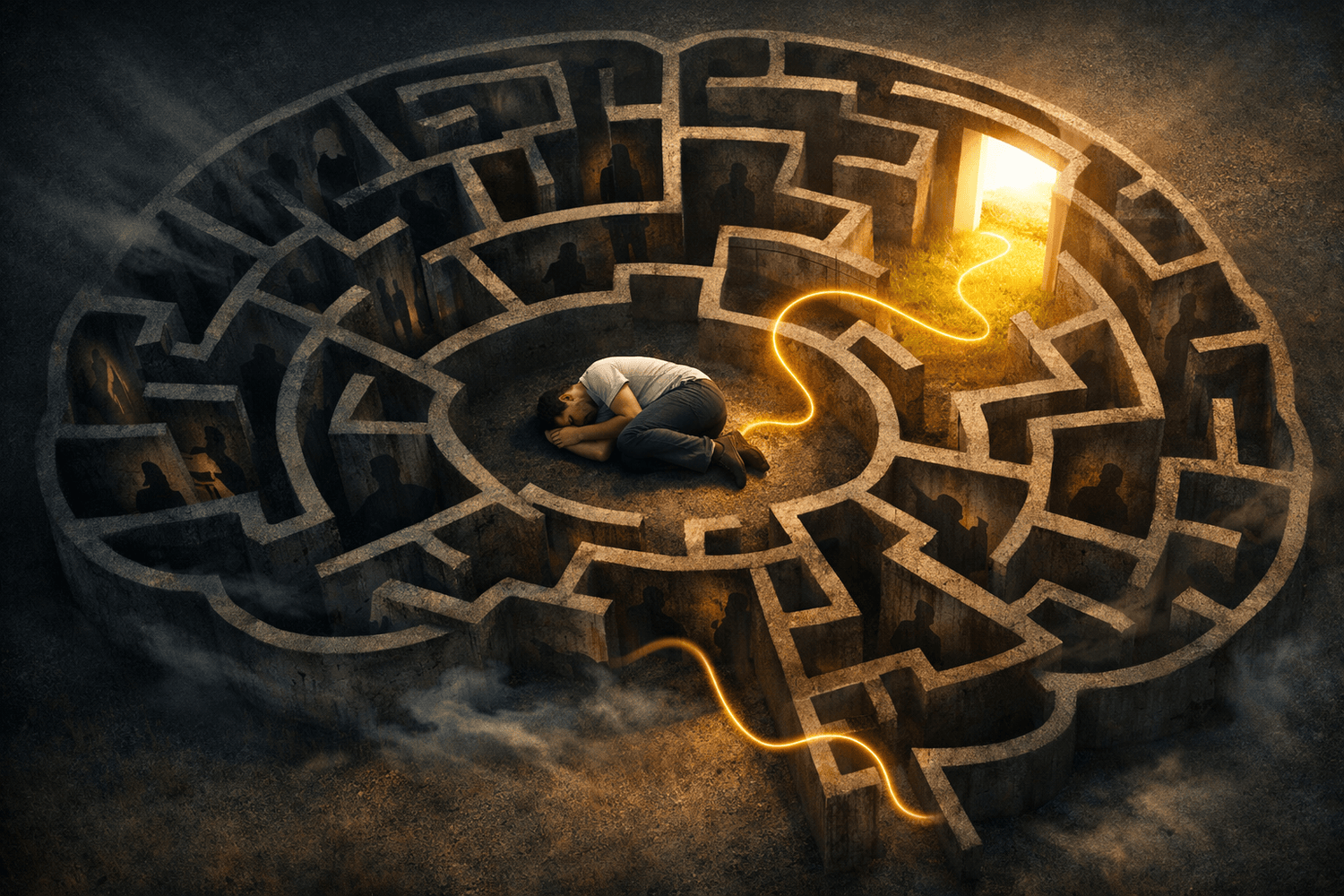
Each of these proofs is grounded in neuroscience, psychology, or behavioral research. These are not affirmations. They are evidence that your patterns can change.
Proof #1 — Neuroplasticity Proves Your Brain Can Change
Research in neuroscience shows the brain keeps forming new connections throughout life. The old idea that your personality or patterns become fixed after a certain age is outdated. Your capacity to change is built into your biology.
Proof #2 — Limiting Beliefs Come From Early Childhood Programming
Between ages 0 and 7, children spend much of their time in theta brainwave states. That is a highly suggestible state. During those years, beliefs are absorbed before critical thinking is fully online. If you believe you are broken, that belief was likely learned early. It was installed before you could question it.
Proof #3 — Trauma Responses Are Survival Adaptations, Not Personality Defects
Patterns like hypervigilance, perfectionism, emotional shutdown, people-pleasing, or fear of conflict often look like dysfunction from the outside. In reality, they are usually survival responses. They developed because your system found a way to cope. That does not make them ideal. It does mean they make sense.
As Dr. Gabor Maté has argued for years, many behaviors people label as pathology are better understood as adaptations to stress and developmental pain. That frame matters, because it replaces shame with usable clarity.
Proof #4 — The Brain Responds to Mental Rehearsal Like Real Experience
Brain imaging research shows that vividly imagined experiences can activate many of the same neural regions as real ones. That is why athletes use visualization. It is also why how to reprogram your subconscious mind is not just a mindset question. Mental rehearsal, when repeated with focus and emotion, can help build new internal patterns.
Proof #5 — Emotional Regulation Can Be Learned
Some people grew up around calm, regulated adults. Others did not. Emotional regulation is not just a personality trait. It is a skill set. That means it can be improved with practice, tools, repetition, and the right environment.
Proof #6 — Repetition Builds and Weakens Neural Pathways
The brain strengthens what it uses. Repeated thoughts and reactions become easier to access over time. The upside is simple: if repetition built the old pattern, repetition can build the new one. This is one of the core mechanisms behind rewiring the brain.
Proof #7 — Beliefs Can Change Physical Responses
The placebo effect is not imaginary. It shows that belief can create measurable biological changes. If expectations can reduce pain, change stress chemistry, and alter perception, then beliefs are not passive thoughts. They are active inputs into the body.
Proof #8 — Epigenetics Shows You Are Not Stuck With One Outcome
Genes matter, but gene expression changes in response to environment and behavior. That means biology is responsive. The story “this is just how I am” is often too simple to be true.
Proof #9 — Rumination Patterns in the Brain Can Change
The brain’s Default Mode Network is involved in self-referential thinking and rumination. Studies on mindfulness show that its activity can shift with practice. Your inner critic is not a permanent identity. It is a pattern of activation.
A 2011 Harvard study found that people spend nearly 47% of their waking hours thinking about something other than what they are doing. That wandering mind was also linked to lower happiness. In plain terms, much of human suffering is repetitive mental drift, not objective reality.
Proof #10 — Attachment Patterns Can Change in Adulthood
Attachment theory does not say childhood writes the final script. People can develop secure attachment later in life through safe relationships, therapy, and repeated corrective experiences. Your first patterns may explain you. They do not define your ceiling.
Proof #11 — Memory Reconsolidation Lets Old Emotional Meaning Change
When a memory is recalled, it becomes more flexible for a brief window before it is stored again. That process is called memory reconsolidation. It matters because the emotional charge attached to old experiences can be updated. The memory may stay. Its grip does not have to.
Proof #12 — Polyvagal Theory Explains Stress Responses Without Shame
Fight, flight, freeze, and fawn are not character flaws. They are nervous system states. If your body reacts strongly, it is because it learned to. That means your stress response can be retrained through breath, body-based work, safety, and repetition.
Proof #13 — Self-Compassion Works Better Than Self-Attack
Research from Dr. Kristin Neff and others has shown that self-compassion supports resilience, motivation, and recovery better than harsh self-criticism. The voice telling you that change requires self-hatred is not telling the truth. It is repeating old conditioning.
Proof #14 — Flow States Reveal Other Ways Your Brain Can Operate
In flow states, self-consciousness drops and performance rises. That alone tells you something important. The version of you that feels chronically limited is not the only version your brain can produce. Other states are available.
Proof #15 — The Gut-Brain Connection Affects Mood and Cognition
Mood is not only psychological. The gut-brain axis links digestion, inflammation, neurotransmitters, and emotion. If you feel off, the answer may not be “I’m broken.” It may be that multiple systems are influencing your mental state at once.
Proof #16 — Post-Traumatic Growth Is Real
Many people do not just survive hard things. They become clearer, stronger, and more grounded because of how they work through them. Pain does not guarantee growth, but growth after pain is common enough that it cannot be dismissed as rare.
Proof #17 — The Search for Change Is Evidence You Are Still Adaptive
The fact that you are reading about subconscious reprogramming at all is evidence of an active drive to adapt. A shut-down system does not search for better models. The impulse to understand yourself is part of what proves you are still capable of change.

How Do Subconscious Beliefs Form? The Imprint Period Explained
From birth through roughly age seven, the brain is highly absorbent. Children learn through repetition, emotion, tone, and environment. They do not just hear what adults say. They absorb how adults act, what adults fear, what gets rewarded, and what gets punished.
That matters because many limiting beliefs do not start as ideas. They start as repeated experiences. A child who feels ignored may form the belief “I do not matter.” A child around chaos may form the belief “I must stay on guard.” These are not logical conclusions. They are conditioned interpretations.
I have edited enough mental health and behavior-change content to know where readers stop trusting a piece like this: when it sounds abstract. So here is the practical version. Most people are not fighting reality. They are fighting a meaning system built before they had language for what was happening.
Understanding the imprint period is not about blaming parents, replaying the past forever, or building a new identity around hurt. It is about accuracy. If a belief was learned, it can be challenged. If it was conditioned, it can be interrupted. If it was repeated into the nervous system, it can be repeated out.
By this point, the problem usually becomes obvious: most people are not lacking motivation. They are repeating the same internal script with more force and calling that effort. If you want the fastest practical reset before you move into the methods below, watch The 5 Mindset Shifts High Performers Use to Get Unstuck. It breaks down the belief changes that make momentum possible when insight alone is not enough.

If you want a clean, structured method (not a long list), use subconscious reprogramming techniques that work (the 3-phase method).
5 Evidence-Based Ways to Reprogram Your Subconscious Mind
1. Use Repetition With Emotion, Not Empty Affirmations
Affirmations only work when they create enough mental and emotional engagement to matter. A sentence repeated with no feeling usually does very little. A sentence repeated in a calm, focused state with genuine emotional charge is much more likely to stick. This is one reason people search for subconscious mind reprogramming techniques that go beyond surface-level self-talk.
2. Practice Meditation for Subconscious Reprogramming
Meditation helps you notice thoughts without automatically becoming them. That gap matters. If you cannot observe a pattern, you usually cannot change it. Consistent mindfulness practice has been linked to changes in stress reactivity, attention, and rumination. For many readers, meditation for subconscious reprogramming is the first method that makes change feel concrete.
3. Use Hypnotherapy to Access Subconscious Beliefs
Hypnotherapy is one of the clearest direct routes into subconscious material because it helps quiet the analytical mind and increase suggestibility in a structured setting. Used well, it can support belief change, habit change, and emotional processing.
4. Use Somatic Work to Change Nervous System Patterns
Not all programming lives in language. Some of it lives in body tension, breathing patterns, posture, startle responses, and shutdown states. Body-based approaches can help release patterns that talk alone does not reach.
5. Change Your Environment to Reinforce a New Identity
Your environment trains you all day. The people you are around, the media you consume, the way your room looks, the routines you repeat, and the standards you normalize all shape subconscious expectation. If you want different results, change what keeps confirming the old identity.
How Long Does Subconscious Reprogramming Take?
There is no honest one-size-fits-all answer. Some shifts happen fast when a person sees a pattern clearly and interrupts it consistently. Others take months because they are tied to identity, stress, history, and environment.
Habit research often points to an average of 66 days for automaticity, but belief change is not a stopwatch process. It moves at the speed of repetition, emotional reinforcement, and nervous system safety. The better question is not “How fast?” It is “What am I repeating every day that makes the old pattern easier to keep?”
If you want to shorten the trial-and-error phase, don’t just wait for repetition to work by accident. Watch The 5 Mindset Shifts High Performers Use to Get Unstuck and see the exact belief shifts that help high performers break old loops faster.

Frequently Asked Questions About Subconscious Reprogramming
Can you really reprogram your subconscious mind?
Yes. The brain changes in response to repetition, focus, emotion, and experience. That is the basis of learning. Subconscious reprogramming uses those same mechanisms on purpose.
How do I know if subconscious beliefs are limiting me?
Look for repeated patterns that do not match your stated goals. That can include self-sabotage, repeated relationship dynamics, avoidance, procrastination, shame, or intense emotional reactions that feel bigger than the situation in front of you.
Is subconscious reprogramming the same as brainwashing?
No. Brainwashing is coercive and externally imposed. Subconscious reprogramming is self-directed. The point is not to hand your mind to someone else. It is to stop being run by old programming you never chose.
What is the fastest way to reprogram your subconscious mind?
Methods that combine emotional intensity, repetition, and high-focus states tend to work fastest. For some people that means hypnotherapy. For others it means visualization, meditation, or somatic work done consistently.
Can subconscious reprogramming replace therapy?
No. It can overlap with therapy and strengthen it, but it does not replace professional care when deeper trauma, depression, anxiety, or other mental health conditions are involved.
Why do I feel broken when my life looks fine on paper?
Because subconscious beliefs do not always update when circumstances change. You can build a good life on the outside and still carry an old internal script that says you are unsafe, unworthy, or one mistake away from losing everything.
The Real Point of Subconscious Reprogramming
If you came here feeling like something was fundamentally wrong with you, stop using that language. What you call brokenness is usually old training. It is a pattern, not an identity. It is conditioning, not destiny.
Subconscious reprogramming matters because it gives you a way to change the pattern instead of worshipping it, fearing it, or building your whole personality around it. You do not need a new excuse. You need a new repetition. Start with one belief, one reaction, or one daily loop, and rewire it on purpose.




UNLOCK FREE MINDSET TRAININGS & EXCLUSIVE DISCOUNTS YOU WON'T FIND ANYWHERE ELSE!
Subscribe to the newsletter and join driven entrepreneurs, solopreneurs, executives, business owners, and high-achieving professionals on a mission to become unstoppable forces for good.
GET MINDSET STRATEGIES DELIVERED TO YOUR INBOX
Unlock free mindset trainings, neural reprogramming techniques, and
exclusive discounts. Join entrepreneurs, executives, and high-achievers
breaking through their mental blocks.
CONNECT WITH MILAN
Got questions about Breakthrough Coaching or Neural Reprogramming?
Send me a message—I read every email.
FREE RESOURCES
© 2026 Milan'Z Coaching